
Shopping Cart
There are no more items in your cart
- IGT Storage Solutions
- 0 likes
- 318 views
- 0 comments
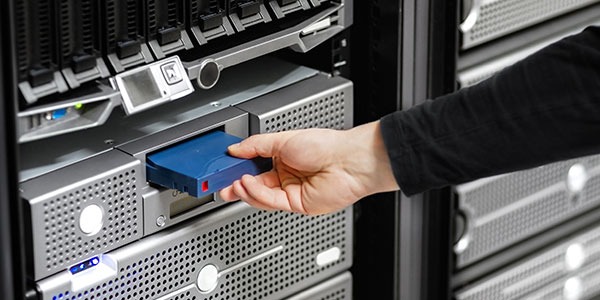
How Remote Work in the Gulf is Changing Data Storage Needs
The shift toward remote and hybrid work has reshaped how businesses in the Gulf operate. What began as a short-term response during the pandemic has evolved into a lasting change. Today, teams across the UAE, Saudi Arabia, Qatar, and beyond are building more flexible work models—collaborating from homes, co-working spaces, and even across borders.
This shift has created new challenges and opportunities for how data is stored, accessed, and protected. Traditional office-based storage setups are no longer enough. Companies are now rethinking their entire approach to managing information securely and efficiently in a remote-first world.
1. The End of Centralised Office Storage
Before remote work, businesses often relied on shared drives, local servers, or even external hard drives kept at the office. Files were easy to find because everyone worked from the same location.
That model no longer fits. Teams now work from multiple cities or even countries within the Gulf. With employees accessing documents from laptops, tablets, and phones, data needs to be available 24/7 from anywhere, without compromising security.
This has pushed companies toward cloud-based and NAS (Network Attached Storage) solutions that allow centralised access while maintaining control.
2. The Rise of Hybrid Storage Solutions
Cloud storage offers accessibility, but full reliance on it can be risky due to bandwidth limitations, privacy regulations, and costs. Many Gulf companies are now adopting hybrid storage systems, a mix of on-premise NAS devices and cloud services.
This model works particularly well in the region because it:
-
Keeps sensitive business data stored locally (meeting data residency and privacy requirements).
-
Uses the cloud for backup and remote access.
-
Reduces reliance on continuous high-speed internet.
NAS systems from brands like QNAP or Synology are increasingly popular because they allow secure file sharing, data syncing, and even private cloud creation, perfect for distributed teams.
3. Data Security Becomes a Priority
Remote work has also expanded the threat surface for businesses. Employees using personal devices or public Wi-Fi increase the risk of data breaches and accidental leaks.
To counter this, Gulf organisations are focusing on:
-
End-to-end encryption for both cloud and NAS systems.
-
Access permissions that control who can view or edit files.
-
Regular backups to guard against accidental deletions or ransomware attacks.
Small and medium enterprises (SMEs), in particular, are investing in secure NAS units that offer built-in firewall protection, two-factor authentication, and automatic versioning to recover previous file states.
4. Bandwidth and Connectivity Challenges
Even though internet speeds in the Gulf have improved, many remote areas and home networks still face stability issues. Uploading large design files, videos, or reports can be slow, especially when teams depend entirely on cloud-based systems.
Businesses are adapting by:
-
Setting up local NAS drives for faster access and syncing to the cloud during off-peak hours.
-
Using 2.5 GbE or 10 GbE network switches for faster internal data transfer.
-
Compressing and structuring file storage to reduce unnecessary load on networks.
This combination keeps productivity high even when internet reliability fluctuates.
5. Cross-Border Collaboration and Compliance
The Gulf’s workforce is highly international. Many teams now span multiple countries within the GCC, working with clients or partners in different jurisdictions.
This raises new questions around data sovereignty, where data is physically stored and who has jurisdiction over it. Governments in the region are implementing stricter rules around this. For example, certain types of financial and healthcare data must stay within national borders.
As a result, businesses are setting up regional data centres or using NAS-based solutions that keep data stored locally while still enabling global access.
6. Shifting Employee Habits and Expectations
Remote work has also changed how employees think about data. Workers expect easy, instant access to files without long VPN setups or IT approvals. At the same time, they want to trust that their information is safe.
This expectation is pushing IT managers in the Gulf to modernise infrastructure, building systems that balance convenience and compliance. Many are replacing old shared drives with secure, web-accessible NAS interfaces or hybrid systems that sync automatically across devices.
7. Looking Ahead: The Future of Storage in a Remote-First Gulf
The shift toward remote and hybrid work isn’t slowing down. Businesses that adapt their data strategies early will find it easier to grow and stay resilient.
The next phase will likely see:
-
Greater adoption of AI-powered storage management tools that automate backups and monitor system health.
-
Wider use of multi-cloud and edge storage to bring data closer to users.
-
More focus on energy-efficient and climate-resistant storage systems built for Gulf environments.
Final Word
Remote work has redefined the way Gulf businesses store and protect data. The move away from physical servers to flexible, secure, and scalable solutions is already transforming productivity.
For small businesses and enterprises alike, the key is balance, combining accessibility with security, and speed with compliance. Investing in the right storage setup now means staying efficient, connected, and protected in the new digital Gulf economy.
At Insights Gulf Store, we offer NAS systems, portable drives, and networking solutions designed for this new way of working, built for performance, reliability, and the region’s unique conditions.
Comments (0)